The electrical power issues that most frequently affect industrial plants include voltage sags and swells, harmonics, transients, and voltage and current unbalance.
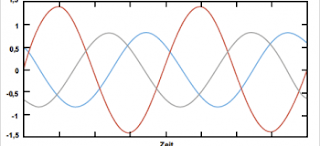
 Voltage Unbalance (or Imbalance) is defined by IEEE as the ratio of the negative or zero sequence component to the positive sequence component. In simple terms, it is a voltage variation in a power system in which the voltage magnitudes or the phase angle differences between them are not equal. It follows that this power quality problem affects only poly phase systems (e.g. three-phase).
Voltages are rarely exactly balanced between phases. However, when voltage unbalance becomes excessive, it can create problems for poly phase motors and other loads. Moreover, adjustable speed drives (ASD) can be even more sensitive than standard motors.
Voltage unbalance is primarily due to unequal loads on distribution lines or within a facility. In other words, the negative or zero sequence voltages in a power system typically result from unbalanced loads causing negative or zero sequence currents to flow.
In a balanced three-phase system, the phase voltages should be equal or very close to equal. Unbalance is a measurement of the inequality of the phase voltages. Voltage unbalance is the measure of voltage differences between the phases of a three-phase system. It degrades the performance and shortens the life of three-phase motors.
Effects of Unbalance
Voltage unbalance can cause three-phase motors and other three-phase loads to experience poor performance or premature failure because of the following:
- Mechanical stresses in motors due to lower than normal torque output.
- Higher than normal current in motors and three-phase rectifiers.
- Unbalance current will flow in neutral conductors in three-phase systems.
Voltage unbalance at the motor terminals causes high current unbalance, which can be six to 10 times as large as the voltage unbalance. Unbalanced currents lead to torque pulsation, increased vibration and mechanical stress, increased losses, and motor overheating. Voltage and current unbalances could also indicate maintenance issues such as loose connections and worn contacts.
Unbalance can occur at any point throughout the distribution system.Loads should be equally divided across each phase of a panel board. Should one phase become too heavily loaded in comparison to others, voltage will be lower on that phase. Transformers and three-phase motors fed from that panel may run hotter, be unusually noisy, vibrate excessively, and even suffer premature failure.
How measure unbalance
You can make some basic phase-to-phase voltage unbalance measurements using a high-quality Digital Multi Meter and phase-to-phase current unbalance using a high-quality clamp meter. Accurate, real-time unbalance measurements need a three-phase power quality analyzer to enable solving unbalance problems. Open circuits and single-phase to ground faults are easier to correct than load balancing, which typically requires corrective system-level design changes..
In reality, voltage differences between phases vary as loads operate. However, motor or transformer overheating, or excessive noise or vibration, can merit troubleshooting for voltage unbalance. Monitoring over time is the key to capturing unbalance. In a three-phase system, the maximum variation in voltage between phases should be no more than 2 percent (the V neg % value on the analyzer), or significant equipment damage can occur.
Causes & Sources
General
The utility can be the source of unbalanced voltages due to malfunctioning equipment, including blown capacitor fuses, open-delta regulators, and open-delta transformers. Open-delta equipment can be more susceptible to voltage unbalance than closed-delta since they only utilize two phases to perform their transformations.
Also, voltage unbalance can also be caused by uneven single-phase load distribution among the three phases - the likely culprit for a voltage unbalance of less than 2%. Furthermore, severe cases (greater than 5%) can be attributed to single-phasing in the utility’s distribution lateral feeders because of a blown fuse due to fault or overloading on one phase.
Motors
The facility housing the motor can also create unbalanced voltages even if the utility supplied voltages are well balanced. Again, this could be caused by malfunctioning equipment or even mismatched transformer taps and impedance. Similar to the utility, poor load distribution within the facility can create voltage unbalance issues.
The motor itself can also be the source of voltage unbalance. Resistive and inductive unbalances within the motor equipment lead to unbalanced voltages and currents. Defects in the power circuit connections, the motor contacts, or the rotor and stator windings, can all cause irregular impedances between phases in the motor that lead to unbalanced conditions.
References:
ANSI C84.1-2006
Dugan, R., McGranaghan, M., Santoso, S., and Beaty, H.W. (2004). Electrical Power Systems Quality (2nd ed.). New York: McGraw-Hill.
IEEE 1159-1995. Recommended Practice For Monitoring Electric Power Quality.
National Electrical Manufacturers Association (NEMA) Publication No. MG 1-1998 Motors and Generators
For Advanced Power Quality products Study & Completely Automated Report:
Connect with Emerich Energy Please write to us info@emerich.in Call: 044-48577667
Please subscribe our blog https://blog.emerich.in/
Follow us LinkedIn https://www.linkedin.com/company/emerichenergy/